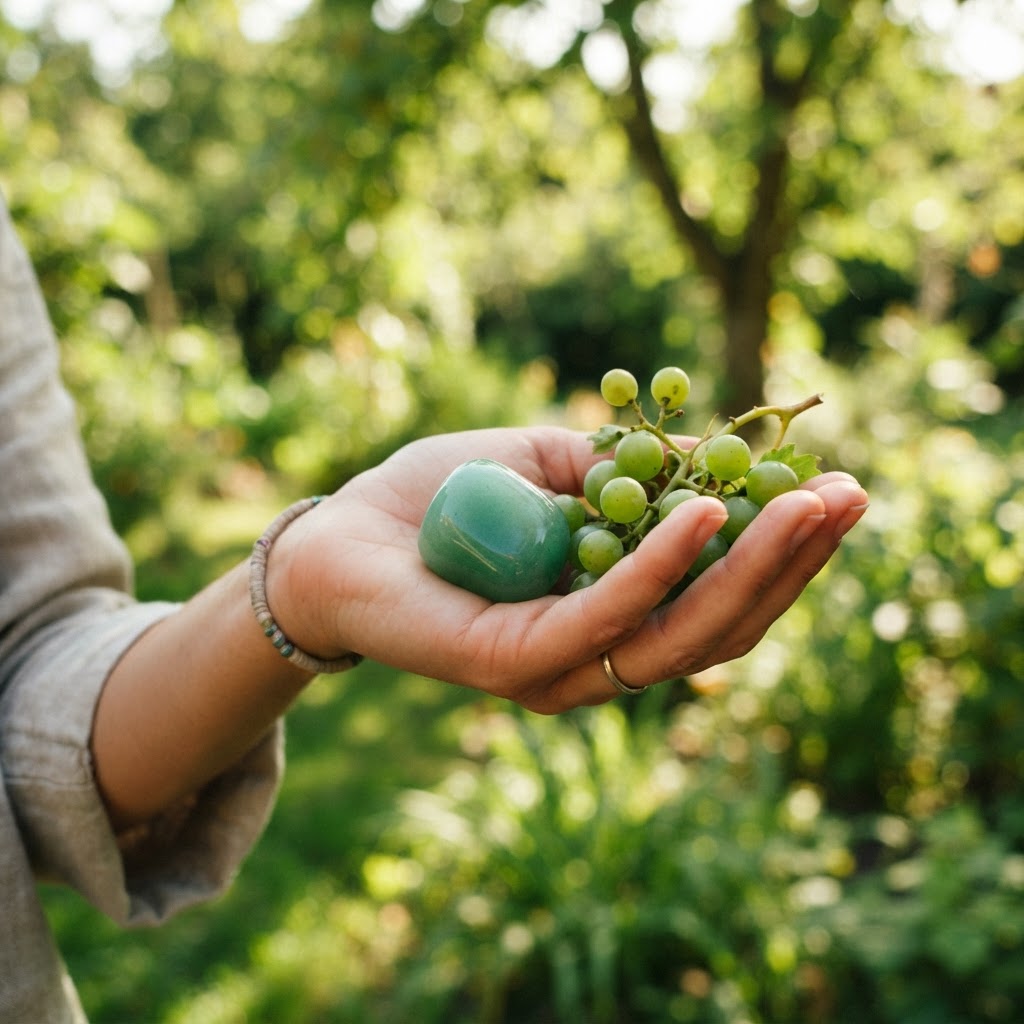
Polishing Removes the Clues
A tumbled or polished stone has had its crystal faces, its natural surface texture and often its outer colour ground away. Everything a geologist would normally read from the outside of a specimen is gone.
What survives is what is inside: the colour, the pattern, the translucency, the lustre, and the hardness. That is a shorter list, but it is enough to sort the green stones, because they differ from one another in exactly those properties.
Green is also the most faked colour in the tumbled-stone trade. Dyed quartzite, dyed howlite and dyed agate are sold as jade, aventurine and malachite constantly, so a few of the tests below are specifically about spotting dye.
The Green Stones You Are Most Likely Holding
These six cover the overwhelming majority of polished green stones in circulation.
- Jade (nephrite or jadeite) — the tough one. Hardness 6 to 7, a greasy or soapy feel, and it takes a superb polish with no visible grain.
- Serpentine — the common jade substitute. Hardness 2.5 to 4, softer, with a waxy feel and often mottled or veined.
- Aventurine — green quartzite or fuchsite with a sparkly metallic sheen from included mica.
- Malachite — vivid banded green with a silky lustre, hardness 3.5 to 4, and it fizzes in acid.
- Green quartz and prasiolite — translucent green quartz at hardness 7, usually evenly coloured with no pattern.
- Dyed material — dyed quartzite, howlite or agate, with colour concentrated in cracks and fractures.
The Three Tests That Matter
Hardness is the fastest split. A knife blade at 5.5 will scratch serpentine and malachite easily, will just about mark jade with effort, and will not touch green quartz at all.
Lustre is the second. Malachite is silky and banded. Jade is greasy and even. Aventurine sparkles with a metallic shimmer. Serpentine is waxy and often mottled.
The dye check is the third. Look at the stone under a bright light and check the cracks. If colour is pooled and darker inside the fractures while the surface is paler, it is dyed. Natural colour runs evenly through the material.
| Stone | Hardness | Lustre and look | The tell |
|---|---|---|---|
| Nephrite jade | 6–6.5 | Greasy, even, superb polish | Extremely tough. A knife barely marks it, and it resists breaking where other stones would snap. |
| Jadeite | 6.5–7 | Greasy to vitreous, often mottled | Harder and denser than nephrite, and rarer. Often shows a fine interlocking texture under a loupe. |
| Serpentine | 2.5–4 | Waxy, mottled or veined | Much softer — a knife scratches it easily. Feels soapy and is noticeably lighter. |
| Aventurine | 7 | Sparkly, with metallic shimmer | The mica flecks catch the light and shift as you turn it. Quartz hardness. |
| Malachite | 3.5–4 | Silky, banded, vivid green | Distinct banding and a silky sheen. Fizzes in acid, and a coin scratches it. |
| Green quartz | 7 | Glassy, even, translucent | No pattern, no banding and no mica. Scratches glass easily. |
| Dyed quartzite | 7 | Colour pooled in cracks | Dye concentrates in fractures and the surface is unevenly coloured. Rub with acetone and colour may lift. |
Why Jade Is the Hard One
Jade is a category, not a single mineral. Nephrite is an amphibole, jadeite is a pyroxene, and both are prized for a property that has nothing to do with hardness: toughness.
Toughness is resistance to breaking, and jade is tougher than almost any other natural material. A thin jade bangle will survive a drop that shatters a thicker piece of glass. That is why neolithic cultures made axes and blades from it long before they could work metal.
So the jade test is not just hardness — it is that a piece of jade feels dense, takes an almost mirror polish with no visible grain, and resists impact in a way serpentine does not. Serpentine looks similar and feels completely different in the hand.
Spotting Dyed Stones
Dye is used on anything porous enough to absorb it: quartzite, howlite, magnesite, agate and jadeite offcuts. It is the single biggest source of confusion in the tumbled-stone market.
Three checks. First, look for colour pooled in cracks and fractures — natural colour is even, dye is not. Second, look at the surface: dyed stones often have a paler, chalky surface with the colour sitting just below it. Third, a cotton bud with a little acetone on a hidden spot will lift dye from many treated stones and leave natural material alone.
One more: natural green stones almost always carry some variation, some veining, some mottling. A uniformly vivid green with no internal structure at all is more often dyed than natural.
The Bottom Line
Polishing removes the surface clues, so a green polished stone is identified by hardness, lustre and pattern. Jade is hard, tough and greasy; serpentine is soft and waxy; aventurine sparkles; malachite is banded and silky; green quartz is glassy and even.
Then check for dye. Colour pooled in cracks, a chalky pale surface and colour that lifts with acetone all point to a treated stone.
For related guides, see green stones identification and jade identifier. Tumbled stones identifier covers polished stones generally, unakite identifier covers the pink-and-green mix, and peridot identifier covers the transparent green gem.
Frequently Asked Questions
Hardness and toughness. Jade is 6 to 7 and a knife barely marks it, while serpentine is 2.5 to 4 and scratches easily. Jade is also exceptionally tough, taking impact that would break serpentine of the same thickness.