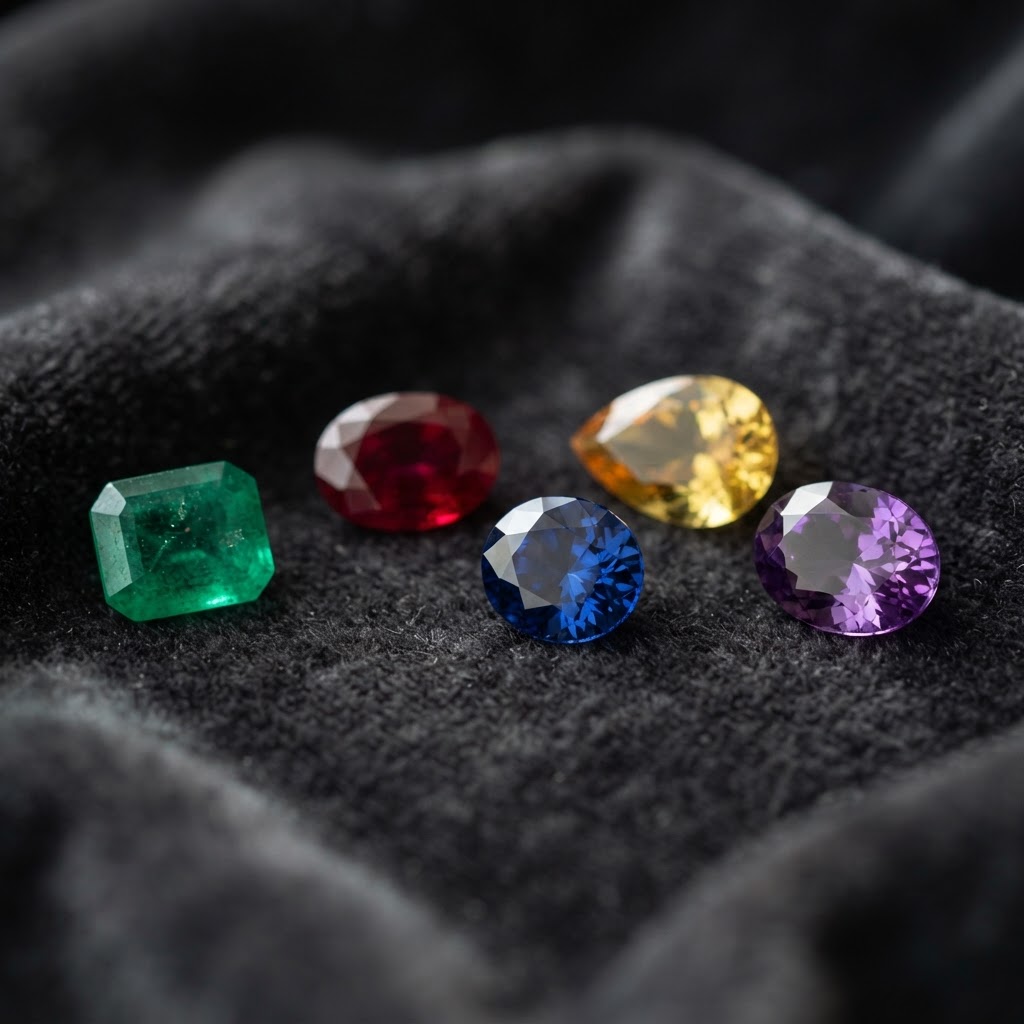
Gemstone Identification Is a Harder Problem
Identifying a rock from a photo is a solvable problem, because rocks have texture. Identifying a cut gemstone from a photo is close to unsolvable, because the cutting process deliberately removes everything that would tell you what the stone is.
A faceted gem is a shape, not a fingerprint. A skilled lapidary can cut a piece of glass, a synthetic sapphire and a natural sapphire into the same brilliant cut, and in a photograph all three look like a blue stone. This is why gemmology relies on instruments rather than eyes.
What a Gemstone App Can Reasonably Tell You
Quite a lot, as long as you keep the claim modest. An app can distinguish colour families reliably, read the cut style, spot obvious surface features, and tell you which gem species typically occur in that colour and cut.
That is genuinely useful for a beginner. If you have inherited a box of loose stones and want to know which are worth a professional look, a colour-and-cut pass gets you a sensible shortlist.
The Test That Separates Real From Synthetic
Almost nothing visible separates a synthetic from a natural gem. Synthetic sapphire and natural sapphire are chemically identical, with the same hardness, the same refractive index and the same colour. The difference is internal: natural stones carry inclusions and growth patterns that labs identify under magnification.
This is why no app, and no jeweller working by eye, can certify a gemstone. If a stone is valuable enough that the answer matters, the answer has to come from a laboratory.
The Big Four and Their Common Impostors
These are the stones people most often want identified, and the materials they are most often confused with.
| Gem | Hardness | Common impostors |
|---|---|---|
| Diamond | 10 | Cubic zirconia, moissanite, white sapphire, glass |
| Ruby | 9 | Red spinel, red garnet, rubellite tourmaline, glass |
| Sapphire | 9 | Blue spinel, tanzanite, iolite, synthetic sapphire |
| Emerald | 7.5–8 | Green tourmaline, chrome diopside, peridot, green glass |
| Amethyst | 7 | Dyed quartz, synthetic quartz, purple glass |
| Citrine | 7 | Heat-treated amethyst, yellow topaz, yellow glass |
Why Refractive Index Matters More Than Colour
Refractive index is how much a material bends light, and it is one of the most reliable ways to identify a cut stone. A gemmologist measures it with a refractometer in seconds, and the reading narrows the possibilities dramatically.
You cannot measure it from a photograph. What you can do is use colour and cut to eliminate options, then hand the stone to someone with a refractometer. For a stone worth more than a few hundred dollars, that step is not optional.
Photographing a Cut Gem So You Get Something Useful
Cut gems are the hardest thing to photograph for identification, because they are designed to throw light back at you.
- Use diffuse daylight. Direct sun or flash creates sparkle that hides the body colour entirely.
- Place the stone on a plain matte surface — white paper or grey card — not on velvet.
- Photograph it dry and clean. Fingerprints are the single biggest cause of bad gem photos.
- Take one shot from directly above and one from the side, so the cut style is visible.
- If the stone is set, photograph it in the setting. The setting style is often a clue about what it was sold as.
When to Take It to a Gemmologist
Take it in if you are insuring it, selling it, disputing its description, or if the identification changes what you do with it. Reputable jewellers often do a basic check for free, and a full laboratory report costs far less than the difference between a synthetic and a natural stone.
For rough, uncut material the picture is different — see raw gem identification, where the crystal form and matrix give you far more to work with than a faceted stone ever will.
The Bottom Line
A gemstone identification app is a sorting tool. It tells you which colour family you are in, what cut you have, and which species are plausible. It cannot tell you whether a stone is natural, treated or synthetic, and no app will.
Use it to decide what deserves a professional look, then get that look. For everything else in your collection, crystal identification app covers the home tests that actually work.
Frequently Asked Questions
No. Natural and synthetic gems of the same species are chemically identical, so nothing visible separates them. Only a laboratory using magnification and instruments can confirm whether a stone is natural, treated or synthetic.